


Germany and India —
A Trading Relationship That Moves the World
Inside might be a precision-engineered gearbox destined for a factory in Pune, a pharmaceutical ingredient for a laboratory in Hyderabad, or a consignment of specialty chemicals headed for a chemical park in Gujarat. Multiply this moment by several thousand every week, and you begin to understand the quiet, relentless scale of the Germany-India trading relationship — one of the most consequential economic partnerships in the world, and one that most people never think about.
Germany's Federal Statistical Office recorded Indo-German bilateral trade at an all-time high of USD 33.40 billion in 2024 — goods flowing both ways across oceans and continents, through the Suez Canal and across the Indian Ocean, year after year without pause. Germany is India's largest trading partner in Europe and the single most important source of industrial imports from the European continent. India, in return, has become one of Germany's fastest-growing export destinations in the world.
But behind every trade statistic is a decision — a procurement manager in Mumbai approving a German machinery purchase, an exporter in Frankfurt choosing India over a rival market, a logistics team tracking a container across three time zones. This is the story of that relationship — why it exists, what moves across it, and what it means for businesses on both sides.
2024 Record High
to India — 2024
Operating in India
How Germany Became India’s Most Important European Partner
A relationship built over sixty years — and now worth more than any other Europe-India trade corridor
The relationship did not happen overnight. German industrial companies began engaging seriously with India in the 1960s and 1970s — Siemens, BASF, Bayer and Bosch were among the early movers, establishing manufacturing partnerships and technical collaborations with Indian public sector companies at a time when India's economy was still heavily regulated. These early investments planted seeds of familiarity and trust that have compounded over decades.
What makes the Germany-India trade relationship distinctive is its depth across multiple sectors simultaneously. This is not a relationship built on one commodity or one industry. Germany exports machinery, vehicles, chemicals, pharmaceuticals, aircraft components and electrical equipment to India — covering almost every pillar of modern industrial production. India, in return, exports textiles, pharmaceuticals, engineering goods, chemicals, software services and a growing range of manufactured products to Germany.
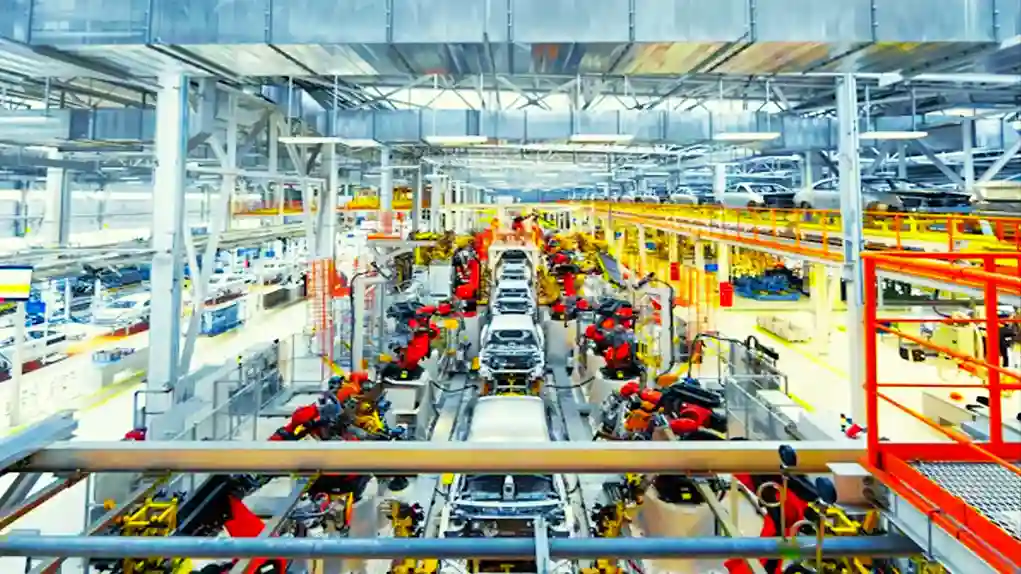
The Indo-German Chamber of Commerce — one of the largest bilateral chambers in the world — counts over 7,000 member companies on its rolls, reflecting the genuine density of business relationships between the two countries. More than 1,800 German companies currently operate in India, spanning automotive, chemicals, engineering, pharmaceuticals, IT and consumer goods. This is not a thin diplomatic relationship kept alive by government communiqués — it is a living, working commercial ecosystem.
Germany doesn’t just export goods to India. It exports precision, reliability and engineering trust — and India has built entire industries on that foundation.
TTI Editorial · Trade & Commerce 2026What Germany Ships to India — and Why India Cannot Get Enough
Six product categories. Billions of dollars. Every one of them moving through Hamburg or Frankfurt every week.
Walk through any major Indian factory — automotive, pharmaceutical, textile, food processing — and you are almost certain to find German equipment somewhere on the production floor. A Heidelberg printing press. A Krones bottling line. A Trumpf laser cutting machine. A Leybold vacuum system. German industrial equipment has an almost mythological reputation in Indian manufacturing circles for reliability and longevity — machines that run for twenty years without significant breakdown, with spare parts still available from the manufacturer.

India's imports from Germany in 2024 tell the full story. Nuclear reactors, boilers, machinery and mechanical appliances led at USD 5.09 billion — engines, turbines, compressors and the precision tools that keep Indian industry running. Aircraft, spacecraft and parts followed at USD 3.38 billion — reflecting the deep aerospace supply chain ties between German manufacturers and Indian carriers and defence programmes.
Electrical machinery and equipment contributed USD 2.06 billion, optical and precision instruments USD 1.69 billion, and vehicles and automotive components USD 1.27 billion. Together, these five categories alone account for over USD 13 billion in annual imports — and each of them moves through a complex logistics chain spanning German factory floors, Hamburg and Frankfurt cargo facilities, the Suez Canal and eventually Indian customs clearance.
| Category | Value (USD) — 2024 | Key Products |
|---|---|---|
| Machinery & Mechanical Appliances | USD 5.09 Billion | Industrial machines, turbines, compressors, CNC equipment |
| Aircraft, Spacecraft & Parts | USD 3.38 Billion | Aerospace components, aircraft engines, avionics |
| Electrical Machinery & Equipment | USD 2.06 Billion | Motors, generators, switchgear, power equipment |
| Optical & Precision Instruments | USD 1.69 Billion | Medical devices, lab instruments, optical systems |
| Vehicles & Automotive Components | USD 1.27 Billion | Cars, trucks, automotive parts and accessories |
| Chemicals & Pharmaceuticals | USD 1.50 Billion est. | Specialty chemicals, APIs, industrial chemicals |
Hamburg to Mumbai — The Journey Every Consignment Makes
Follow one container from a Stuttgart factory to a Rajasthan assembly plant — 18 to 28 days, two continents, one extraordinary logistics chain
To understand what the Germany-India trade relationship actually looks like in physical terms, follow a single container on its journey. A manufacturer in Stuttgart has an order from a tractor plant in Rajasthan — a consignment of hydraulic components, precisely engineered, weighing 8,400 kg, packed into a 20-foot container. The container is sealed at the factory, collected by a road transport company and driven 220 kilometres north to the Port of Hamburg.
Hamburg — Europe's second-largest container port — handles over 8 million TEUs annually and is the dominant gateway for all Germany-India sea freight. The container joins hundreds of others in the port's vast terminal, is loaded onto a vessel, and begins its journey. The routing takes it south through the North Sea, through the English Channel or around Scotland, into the Atlantic briefly, through the Strait of Gibraltar, across the Mediterranean, through the Suez Canal into the Red Sea, across the Arabian Sea and finally into JNPT Mumbai.
Hamburg Port
Germany · Origin
JNPT Mumbai
India · Destination
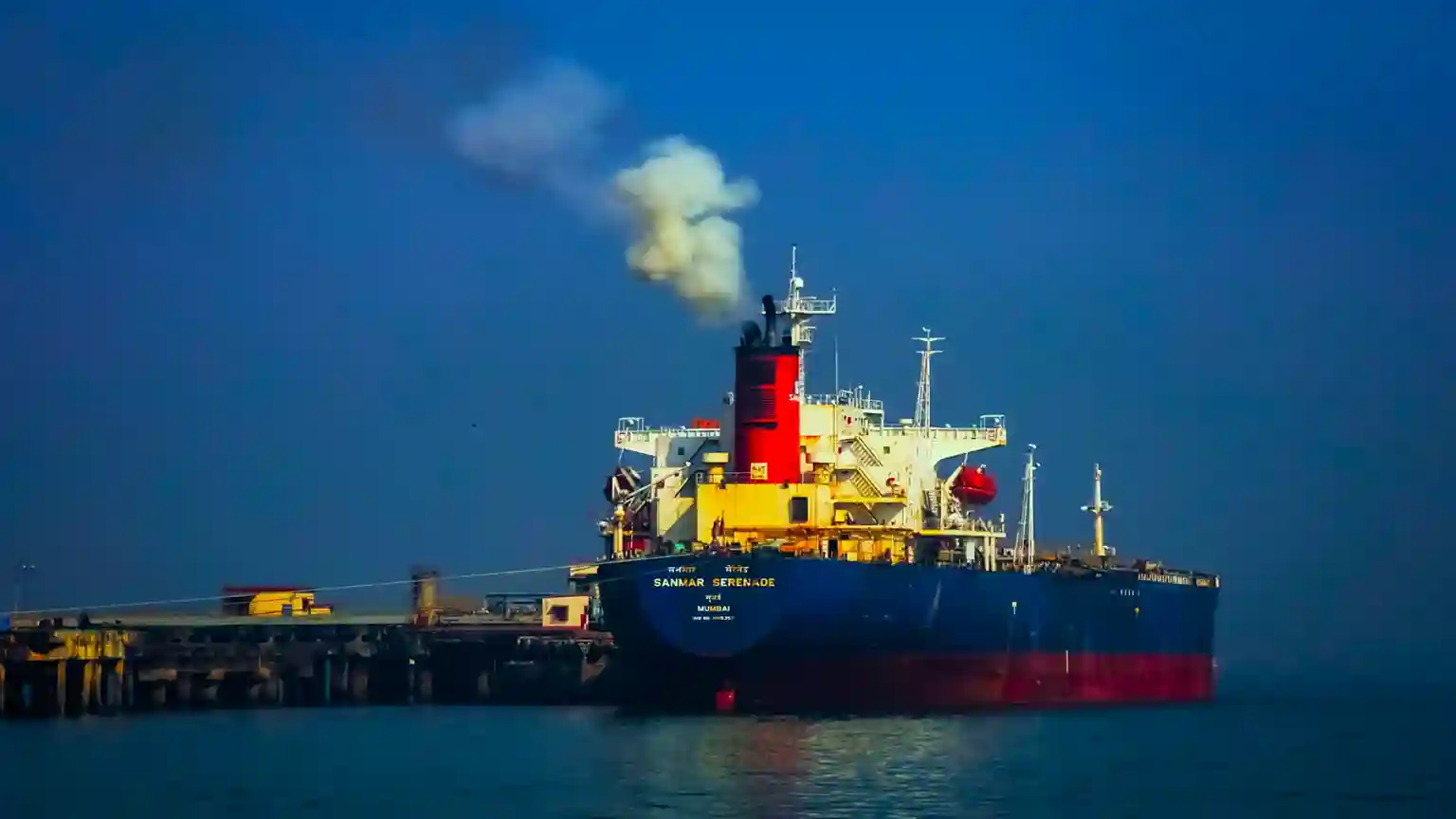
The journey takes between 18 and 28 days by sea — one of the shorter European routes to India given Hamburg's direct sailing options to Indian ports. For businesses that cannot wait three weeks, Frankfurt Airport offers an alternative: air freight to Delhi or Mumbai in 48 to 72 hours, with rates ranging from USD 3 to USD 10 per kilogram depending on the commodity and urgency. Germany's air cargo infrastructure is among the best in Europe — Frankfurt is the continent's largest air freight hub, handling over two million tonnes of cargo annually.
For shipments below 12 to 15 CBM, LCL — Less than Container Load — consolidation from Hamburg is the most cost-effective option. Your cargo shares container space with other shippers. For larger orders above 15 CBM, a dedicated FCL container gives better value and complete cargo security. Weekly LCL consolidations depart Hamburg for all major Indian ports.
India side: JNPT Mumbai (largest, primary), Mundra Gujarat (fastest customs clearance, best for North India), Chennai (South India gateway), Kolkata (East India).
Air freight moves exclusively through Frankfurt FRA on the Germany side, arriving at Delhi IGI or Mumbai BOM in India.
Why the Best of Germany-India Trade Is Still Ahead
Three powerful forces are aligning to make this relationship larger, deeper and more consequential than ever
The Germany-India trade relationship is not standing still — it is accelerating. Three powerful forces are converging simultaneously. First, India's manufacturing ambition under the Production Linked Incentive schemes is creating massive new demand for German industrial equipment across electronics, pharmaceuticals, automotive, textiles and food processing. Indian factories are being built and upgraded at a pace that generates consistent, growing demand for precisely the kind of precision machinery that Germany excels at producing.
Second, the EU-India Free Trade Agreement negotiations — 11 rounds completed as of May 2025 — promise to reduce tariffs on many categories of goods when concluded, making German exports to India more competitive and Indian exports to Europe more accessible. The FTA has the potential to add several billion dollars to bilateral trade annually.
🏭 Recent German Investments in India — 2024-25
German companies are backing India with serious capital — not just trade, but manufacturing and services investment
Every one of these investments generates freight — equipment shipped from Germany to India, components moving back and forth, spare parts dispatched urgently by air when production lines stop. The physical movement of goods between Germany and India is not just trade statistics — it is the circulatory system of a manufacturing relationship that is growing stronger every year.
A Relationship Built on Mutual Respect for Excellence
There is something fitting about Germany and India as trading partners. Both countries have deep cultures of craftsmanship, technical expertise and long-term thinking. The German engineer and the Indian entrepreneur share more than a trade agreement — they share a conviction that making things well, building things that last, and doing business with integrity are worth the effort. That shared instinct is, perhaps, the real foundation of a relationship that has now reached USD 33 billion and shows every sign of continuing to grow.
The containers will keep moving. The aircraft will keep departing Frankfurt. The vessels will keep arriving at JNPT Mumbai. And somewhere in Hamburg this morning, another container is being sealed, lifted and loaded — bound for India, carrying something that will help build, manufacture, heal or power a country that is in the middle of one of the great economic transformations of our time. That is what a trading relationship that moves the world actually looks like.
🚢 Shipping Goods Between Germany and India?
Whether you are importing German machinery, chemicals, automotive components or any other goods into India — or exporting Indian products to Germany — every consignment requires careful logistics planning. Sea freight from Hamburg takes 18 to 28 days. Air freight from Frankfurt reaches Delhi or Mumbai in 48 to 72 hours. Weekly LCL consolidations depart Hamburg for all major Indian ports.
TTI Shipping & Logistics, based in New Delhi, manages complete door-to-door shipments from Germany to India — covering pickup, export customs clearance, ocean or air freight, India customs clearance and last mile delivery anywhere in India. Their complete guide covering costs, transit times, documentation and customs is here: Shipping from Germany to India — Complete Guide 2026 →
Shipping from Germany to India? Get a Free Quote
Sea freight LCL and FCL from Hamburg — air freight from Frankfurt — door to door to anywhere in India. Response within 1 hour on WhatsApp.
⚡ TTI Shipping & Logistics, New Delhi — India Import Specialists
💬 WhatsApp for a Free Quote — 1 Hour Response






Leave A Comment